
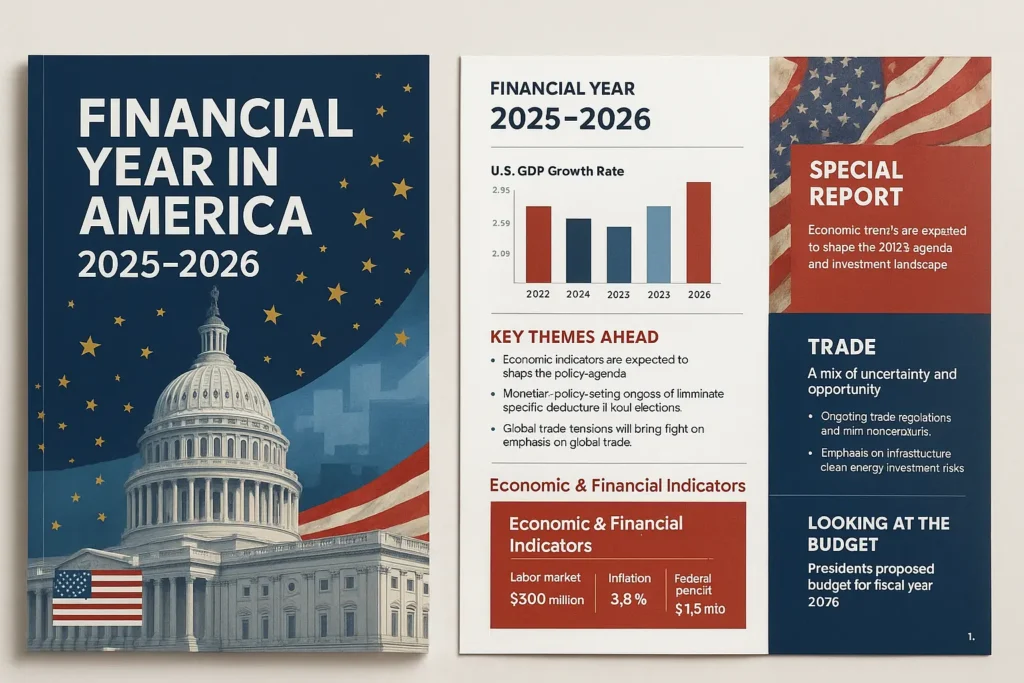
One of the most significant deadlines for taxpayers, businesses, corporations, and governmental agencies in America is the end of the financial year. However, in contrast to most other nations where a standard system is used, the financial year in America, is a combination of varying fiscal years-federal, state, and business, which have their own regulations and reporting standards. It is a complex structure, particularly for small businesses, global companies, or anyone attempting to understand tax deadlines in the United States.
The financial year is not just an ordinary 12-month period in the U.S., but one that defines how tax returns, budgets, and financial statements are prepared. Whether you are a business calculating your cash flow cycle, a corporation working out how long your financial year is, or an individual preparing your returns, it is important to understand which financial year America uses to stay current and plan.
Financial Year vs. Calendar Year i the USA
The first difference to appreciate in the US fiscal year is the distinction between a calendar year and a financial (fiscal) year. A calendar year is defined as the period between January 1 and December 31, and the financial year can be any other 12-month period elected for accounting.
The relevance of this difference is substantial. A financial year ending after the busiest season is a popular choice with businesses with a seasonal cycle, including retail, agriculture, or tourism. In the meantime, many taxpayers and small businesses are just paying attention to the calendar year because it coincides with the IRS tax year. For example:
- Users of Calendar Year: Salaried people, freelancers, the majority of small businesses, and sole owners.
- Fiscal Year Users: Corporations that have distinctly seasonal patterns, nonprofits, and some state governments.
U.S. Federal Government Fiscal Year
Knowing which structure you are under allows you to set your filing date, budget seasons, and compliance date.
The federal government of the U.S. has a regular financial year:
September 30 to October 1 of the following year.
This cycle is used for:
- Federal Budgeting
- Agency Funding
- Congressional Appropriations
- Government Spending Plans
This odd timing of the federal government has a historical rationale. In 1976, Congress moved the federal year-end to provide government agencies with additional time to budget and to move between administrations. This is the timeline that is currently being worked on by every federal department, including the IRS, the Department of Education, and others.
This cycle contributes significantly to economic planning. The federal fiscal year makes federal grants, social programs, public spending, and contract awards critical to businesses that depend on government contract allocations.
State Fiscal Years In America
Most states in the US have different cycles, while the federal government uses a September-October cycle. July 1 to June 30 is the most widespread state fiscal year. Nonetheless, fiscal years differ across states. Some states have special schedules depending on historical budgetary trends or domestic laws. Examples of variations:
- New York: April 1 – March 31
- Texas: September 1 – August 31
- Alabama & Michigan: 1st -30 Sept.
Such differences influence the timing of state taxation, budgetary periods, education allocations, and state expenditures. All individuals operating businesses in more than one state should be familiar with local fiscal regulations, particularly when filing state taxes or setting up multi-state operations.
Financial Year for Businesses and Corporations
The IRS in the U.S. gives businesses an option of:
- A Calendar Year (January-December)
- A Fiscal Year (any 12 months wrap (or any sequence) ending on the final day of any month)
The selected financial year will dictate the manner in which income is reported, the calculation of expenses, and how taxes are submitted.
IRS Rules for Business Tax Years
Corporations, partnerships, and LLCs may select their financial year in America depending on:
- Operational cycles
- Industry seasonality
- Reporting preferences
- Integration is required in a company group.
Industries that benefit from non-traditional fiscal years include:
- Retail (year-end after sales after holiday)
- Hospitality (annual end of peak seasons)
- Farming & agriculture
- Construction companies
- Educational institutions
- Companies that have a lengthy production time.
The decision of the right financial year in America assists businesses in maximizing cash flow, minimizing their tax liabilities, and preparing more reliable financial statements.
How to Choose or Change a Financial Year (For Businesses)
The choice of the appropriate financial year is based on your business model. Other companies match their financial year with the season in which they perform best or worst. Some are on par with the parent company in terms of consolidating their fiscal year.
Choosing a Financial Year
You may select a fiscal year in which:
- Your company has a recurring seasonal pattern.
- You desire consistency in reporting in a group.
- You are obliged to identify with a mother company in another country.
Your business needs irregular reporting.
Changing a Financial Year
To alter your financial year, the IRS will require:
- Form 1128 – Application To Adopt, Change, or Retain a Tax Year.
- Elaborate justification of the change.
- IRS authorization (in most instances)
- Indication that the change will be relevant to the business interests.
Switching fiscal years is not conducted in a carefree manner as it influences tax filing, reporting, and bookkeeping processes. Most companies engage tax consultants or outside accounting firms to help them comply.
The Importance of the Financial Year in America
Regardless of your industry, financial knowledge will keep your business on schedule both legally and financially. The U.S. has various overlapping cycles thus clarity would ensure that you avoid compliance risks, penalties, and budget errors. The major advantages of knowing the U.S. Fiscal System:
Better Business Planning
Structured performance analysis, forecasting and budgeting is feasible through a clear financial year.
Accurate Tax Filing
Understanding your business as either calendar year or fiscal year can make you meet the IRS-imposed deadlines and escape fines.
Open Reporting and Audit
Your financial statements must conform to your preferred fiscal timeline to the auditors, investors, and lenders.
Investor Confidence
An aptly chosen financial year will make sure that your reports represent the real financial success of your business- increasing the trust of the stakeholders.
End of Financial Year in America
Financial year America is defined by category:
Federal Year-End
September 30
This provokes federal budget approvals, expenditure evaluations, and agency reports.
State Year-End
Majority states close a year on June 30, with some having differences depending on the state law and the budget year.
Corporate Year-End Tasks
Whichever time of the year a business closes its financial year, the year end period necessitates a number of compliance and accounting activities such as:
- Completing financial statements.
- Finishing expense reconciliation.
- Preparing tax documents
- Conducting internal audits
- Checking cash flow and profitability.
- Checking balances and accounts.
- Filing annual reports
Outsourced accounting firms are frequently engaged by business to complete workloads at the end of the year, particularly in closing books or producing investor reports.
Wrapping Up
The American financial year is not a one-fit-all vision. Rather, it is a stratified system consisting of the federal, state and business fiscal cycles, but each with distinct purposes. Knowledge of such timelines assists individuals to remain compliant, business firms to make more informed decisions, and organisations to have clear reporting.
Be it a single-state-localized business or with multi-jurisdiction operations or just filing personal taxes, understanding the date the financial year commences and ends will make the process of planning, budgeting, and overall stress-free compliance easier.
Frequently Asked Questions
Q1: What is the financial year in the USA?
A financial year in America is a period of 12 months in which accounting is done to tax filing, budgeting, and financial reporting. It can be based on a calendar year or a fiscal year selected by the government, states or corporations.
Q2: What is the U.S. tax year?
To individuals, its U.S. tax year is the calendar year, January 1 to December 31. Businesses can use the calendar year or a selected fiscal year that has been accepted by the IRS.
Q3: What is the difference between financial year and fiscal year?
Financial year and fiscal year are both used as a 12-month accounting period in the U.S. But again a fiscal year can vary with the calendar year based on government regulation or business requirements.

Share this Article